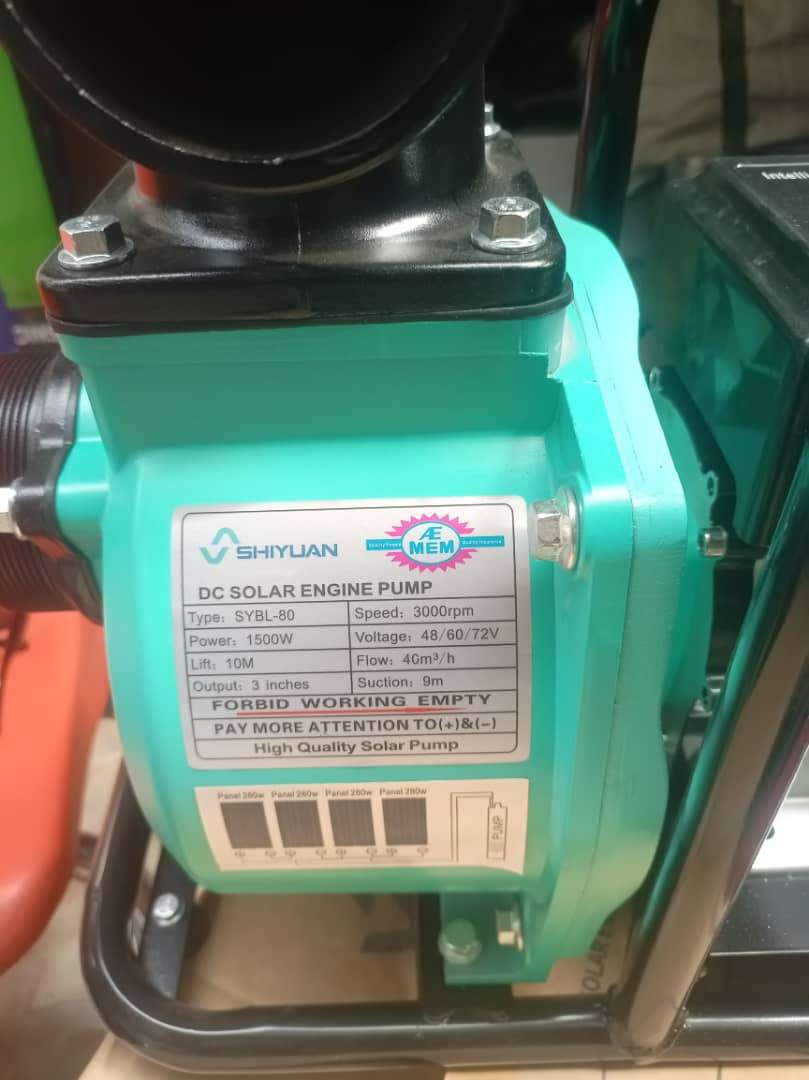
A Solar Irrigation Pump | 2HP is a type of pump designed to use solar energy to power the irrigation system for agricultural or landscaping purposes.
Key Features of Solar Irrigation Pump | 2HP:
Power Source:
Solar Panels: The pump is powered by solar panels, which convert sunlight into electrical energy. Typically, a 2HP pump will require a significant number of solar panels, depending on the efficiency of the panels and the amount of sunlight available.
Pump Type:
Surface Pump: Designed for shallow wells or surface water sources.
Flow Rate and Head:
Flow Rate: Refers to the volume of water the pump can deliver per minute or hour. For a 2HP pump, this could range from a few gallons to several hundred gallons per minute.
Head: Refers to the height the pump can lift the water. The higher the head, the more energy the pump needs.
Efficiency:
Solar pumps are generally very efficient, but their performance can vary based on the amount of sunlight and the design of the system.
Control Systems:
Inverter: Converts the DC power generated by solar panels into AC power for the pump.
Controller: Manages the operation of the pump and optimizes energy use.
Solar Irrigation Pump | 2HP Advantages:
Eco-Friendly:
Uses renewable solar energy, reducing dependence on fossil fuels and minimizing environmental impact.
Cost-Effective:
While the initial investment in solar panels and pump system can be high, operational costs are minimal, as sunlight is free.
Low Maintenance:
Solar pumps generally require less maintenance compared to diesel or electric pumps.
Considerations:
Initial Cost:
The upfront cost of solar panels, inverter, and the pump can be significant.
Sunlight Dependence:
Performance is dependent on sunlight availability, which can vary by location and weather conditions.
Installation:
Proper installation is crucial for optimal performance. This may involve mounting solar panels, wiring, and setting up the pump.
Battery Storage (Optional):
If irrigation is needed during cloudy periods or at night, a battery storage system can store excess solar energy for later use.
Applications:
Agriculture: Irrigating crops and fields.
Landscaping: Watering gardens, lawns, and parks.
Rural Areas: Providing water for communities with limited access to electricity.
Reviews
There are no reviews yet.