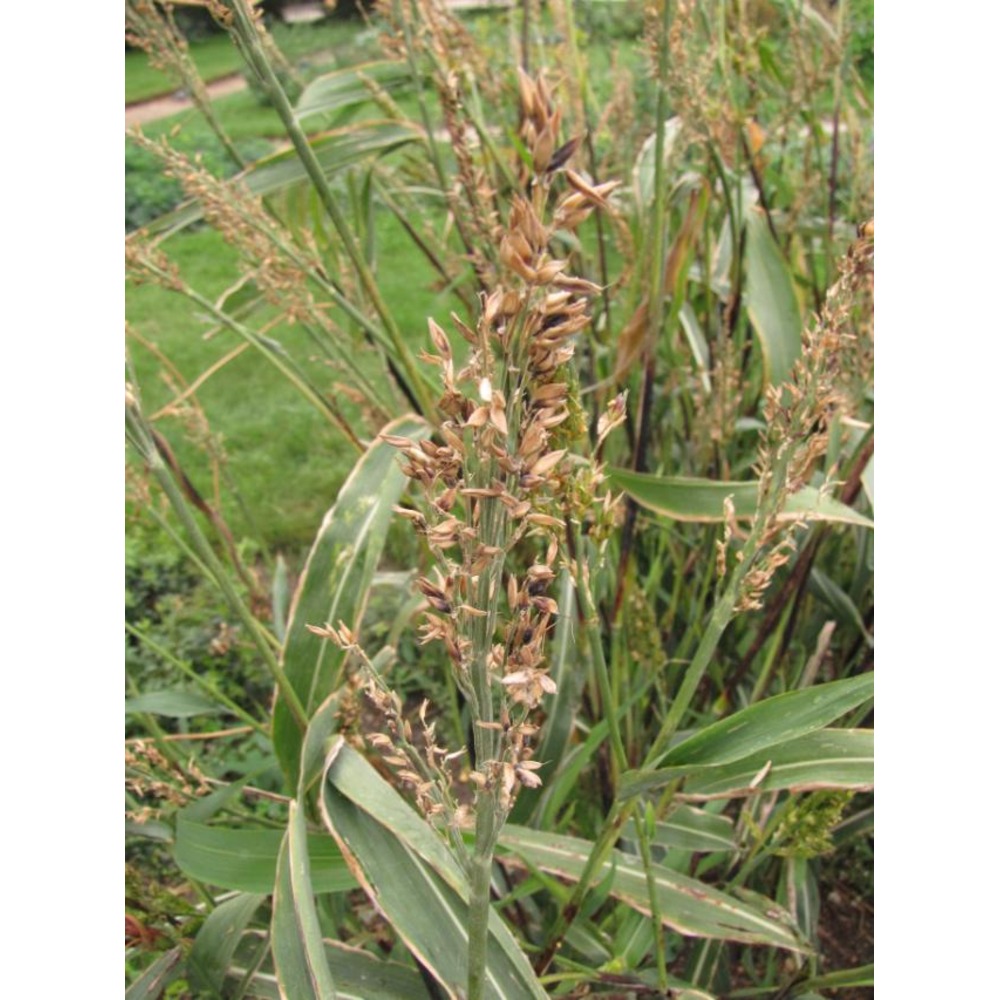
Forage Sorghum | 1kg (MOQ: 5kg) is a versatile, drought-tolerant annual grass cultivated specifically for its high tonnage of vegetative biomass, used as livestock feed. It is a cost-effective and reliable summer forage crop, especially valuable in semi-arid regions. This product offers the seeds for establishing a high-yielding forage stand. The 1kg listing with a Minimum Order Quantity (MOQ) of 5kg is targeted at livestock farmers who need substantial forage reserves, as 1kg of sorghum seed typically plants about 0.25 – 0.5 acres.
Characteristics & Agronomic Benefits of Forage Sorghum | 1kg (MOQ: 5kg):
-
Type: Annual grass, closely related to grain sorghum but selected for leaf and stem production.
-
Growth Habit: Tall, with thick stems and a large leaf area, forming a dense canopy.
Major Advantages for Livestock Farmers:
-
Exceptional Drought & Heat Tolerance: One of the most water-efficient forage crops, making it ideal for rain-fed agriculture in dry summer months where corn would fail.
-
High Biomass Yield: Can produce a massive amount of forage per hectare, often comparable to or exceeding corn silage under dryland conditions.
-
Flexibility in Use: Can be grazed (often in a strip-grazing system), cut for green chop, or, most commonly, harvested as high-quality silage.
-
Cost-Effective Establishment: Generally lower seed cost and lower water requirement than corn for silage.
Important Considerations:
-
Prussic Acid (Cyanogenic Glycosides): A potential toxin in young, stressed, or frosted plants. Risk is minimized by:
-
Nitrate Accumulation: Can occur in drought-stressed plants fertilized with high nitrogen. A lab test is recommended before feeding.
Establishment & Planting Guide:
-
Land Preparation: A well-prepared, firm seedbed is ideal.
-
Planting Time: Sow after the soil has warmed up in the spring (> 15°C or 60°F). It is a warm-season crop.
-
Planting Method:
-
Sowing Rate: 10-15 kg per hectare (approx. 4-6 kg per acre). The 5kg MOQ is suitable for about 1-1.5 acres.
-
Sowing Depth: 2.5 – 5 cm deep.
-
Spacing: Drilled in rows 30-75 cm apart. Narrower rows favor leaf production; wider rows allow for tillering.
-
Fertilization: Responds well to nitrogen fertilizer, which significantly boosts yield.
Management & Utilization:
- For Grazing: Use a rotational system to avoid animals consuming young, potentially toxic growth and to allow for regrowth.
- For Silage (Most Common Use): The optimal harvest stage is when the grain is in the soft to hard dough stage. This provides the best balance of yield and energy content.
- For Hay: Can be challenging due to the thick stems, which dry slowly. Specialized conditioning equipment is often needed.
Target Audience & Ideal Use:
- Dairy & Beef Farmers: As a primary or supplemental summer silage crop.
- Sheep & Goat Farmers: For grazing or stored feed.
- Farmers in Drought-Prone Areas: As a reliable “insurance” forage crop.





Reviews
There are no reviews yet.