



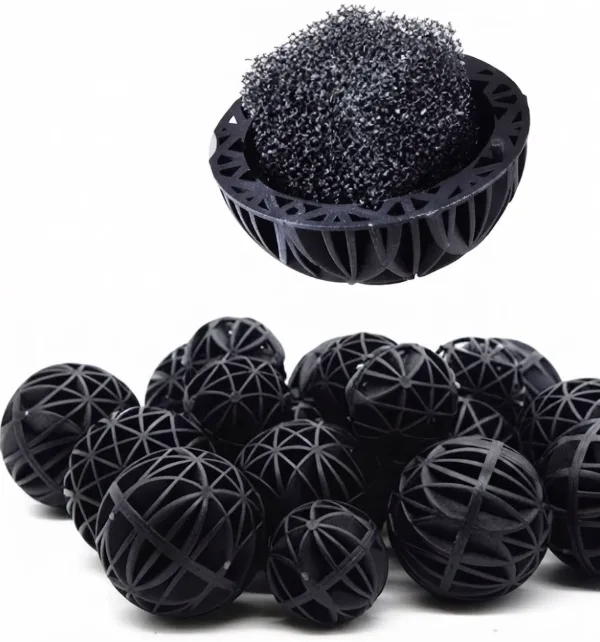
Bio Ball Filter Media
₦19,099.00
Bio Ball Filter Media are specially designed plastic spherical biological filter media with a highly textured surface and hollow interior that provides an enormous surface area for beneficial bacteria colonization in fish pond and aquaculture filtration systems. Lightweight, durable, self-spacing and virtually maintenance-free, Bio Balls are the most popular and widely used biological filter media among Nigerian fish farmers and aquaculture operators who want reliable, long-lasting and high-performance biological filtration.
Why customers choose us
- Satisfaction Guaranteed
- Fast delivery
- Secure Payments
- 24/7 Customer assistance
Bio Ball Filter Media are the iconic biological filter media that have become the standard choice for fish farmers and aquaculture operators around the world, and increasingly among serious Nigerian fish farmers who understand the critical importance of biological filtration in maintaining healthy pond water.
Each Bio Ball is a small plastic sphere designed with a highly complex surface texture featuring ridges, bumps, holes and projections that dramatically increase the total surface area of each individual ball far beyond what a smooth sphere of the same size would provide. This complex surface, combined with the hollow interior of each ball, creates an enormous total surface area per ball where beneficial nitrifying bacteria can colonize and establish stable, highly active populations.
Key features of Bio Ball Filter Media:
- Highly textured complex surface design maximizing total surface area for bacterial colonization
- Hollow interior provides additional bacterial colonization surface within each ball
- Self-spacing design prevents compaction and maintains good water flow throughout the media bed
- Made from inert food-grade plastic that never degrades, corrodes or leaches chemicals into water
- Lightweight and easy to handle during installation and maintenance
- Virtually maintenance free, rarely needing cleaning unlike foam or mat media
- Can be used in trickle filters, wet and dry filters, sumps and biological filter chambers
- Suitable for freshwater and saltwater aquaculture systems
- Long service life, Bio Balls last for many years without needing replacement
- Compatible with all standard biological filter housings and sump systems
Why Bio Balls are superior for biological filtration:
Bio Balls have several advantages over foam and mat filter media for biological filtration. Their self-spacing design means they never compact and block water flow the way foam can. They are virtually maintenance free because their design does not trap debris the way foam does, so they remain free-flowing for years without needing regular cleaning. And their inert plastic construction means they never degrade or need replacing, making them a one-time investment that delivers decades of reliable biological filtration performance.
How to use Bio Balls:
Fill your biological filter chamber, sump or trickle filter tower with Bio Balls to the desired depth. Ensure adequate water flow through the media bed to supply oxygen and food to the bacterial colonies. In trickle filter applications allow water to trickle over the surface of the Bio Balls rather than submerging them completely, as this exposes the bacteria to both water and air for maximum nitrification efficiency. Allow 4 to 6 weeks for beneficial bacteria to fully colonize the Bio Balls. Once established, the bacteria will process your pond’s ammonia load continuously with minimal maintenance from you.
Bio Ball Filter Media are the durable, maintenance-free and highly effective biological filtration media that give Nigerian fish farmers years of reliable ammonia control and stable water chemistry with almost no effort. Order yours today from HTS Farms and build the biological filtration foundation your fish pond needs.
Additional information
| Weight | 15 kg |
|---|
| Attribute | Specification |
|---|---|
| Type | Plastic Biological Filter Balls |
| Material | Inert Food-Grade Plastic |
| Function | Biological Filtration and Ammonia Removal |
| Design | Self-Spacing Textured Hollow Sphere |
| Service Life | Many Years, No Replacement Needed |
| Suitable For | Trickle Filters, Sumps, Biological Filter Chambers |
| Maintenance | Virtually None Required |
Frequently Asked Questions
What are Bio Balls used for?
They are biological filter media that provide a large textured surface area for beneficial bacteria to colonize and convert harmful ammonia and nitrite into safer compounds in fish ponds.
How long do Bio Balls last?
Bio Balls are made from inert plastic that does not degrade, corrode or need replacing. They can last for many years or even decades of continuous use.
Do Bio Balls need cleaning?
Bio Balls are virtually maintenance free because their self-spacing design prevents compaction and debris trapping. Occasional rinsing in pond water is all that is needed if flow becomes restricted.
What is the difference between Bio Balls, Bio Foam and Bio Mat?
Bio Balls are best for pure biological filtration in trickle filters and sumps with minimal maintenance. Bio Foam provides combined mechanical and biological filtration. Bio Mat provides high surface area biological filtration in a mat format. All three work excellently when combined in a multi-stage filtration system.



Reviews
There are no reviews yet.