

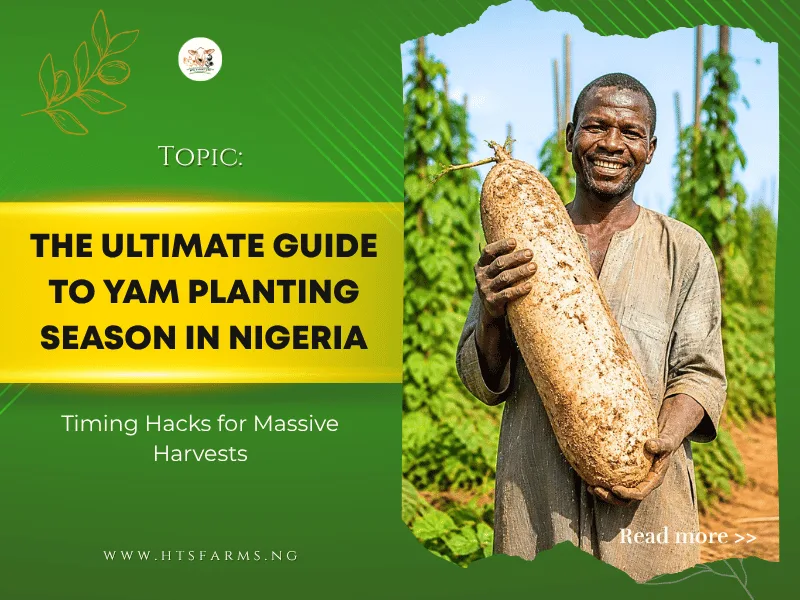
- Best Planting Window: February to March in Southern Nigeria; April to May in the Middle Belt and Northern regions.
- Germination and Harvest: Sprouting takes 3 to 6 weeks. Harvesting occurs in 5 to 7 months for early varieties and 7 to 10 months for main crops.
- Top Producing Region: Benue State leads as the primary production hub, supported by the wider Nigerian market that accounts for 67% to 70% of global yam production.
- Fertilizer Needs: High-potassium formulas like NPK 15-15-15 or well-cured organic compost build larger, heavier tubers.
- Growth Hacks: Vine staking, mound mulching, and prompt weed removal increase growth rates and preserve soil moisture.
Yam is the king of crops in Nigeria. Planting at the right time turns an average harvest into a huge, profitable yield. I am going to show you exact planting windows, step-by-step techniques, and secret soil hacks to scale your farm output this season. Check out our high-yield yam seed minisetts to start your farm with clean planting material.
According to data on yam production in Nigeria on Wikipedia, Nigeria is the world's largest producer of yams. In fact, official agricultural estimates show that Nigeria accounts for 67% to 70% of global yam production, generating tens of millions of metric tonnes annually.
Nigeria Yam Planting Season By States/Region
Use this visual breakdown to quickly identify the ideal time to clear land, prepare mounds, and drop your setts into the ground based on your state or ecological zone.
| Zone / Region | States Covered | Optimal Planting Window |
|---|---|---|
| Rainforest Belt (Southern Nigeria) |
Oyo, Cross River, Ogun, Osun, Edo, Delta, Imo | February – March |
| Guinea Savanna (Middle Belt) |
Benue, Taraba, Kogi, Niger, Nasarawa | March – April |
| Sudan Savanna (Northern Nigeria) |
Kaduna, Kano, FCT Abuja, Katsina, Bauchi | Late April – May |
| Irrigated Dry Season (River Basins / All Zones) |
National Coverage (Commercial Basins) | November – December |
What is the best month to plant yams in Nigeria based on your zone?
The best month to plant yams in Nigeria depends on your state's rainfall pattern. Southern farmers start earlier in February, while Northern farmers wait until late April or May. Getting this timing right ensures your seed tubers do not rot in dry soil or drown in heavy floods.
When to plant yams in the Rainforest Belt of Southern Nigeria?
Farmers in Southern states like Oyo, Cross River, and Ondo plant between February and March. Early rains arrive early in this belt. Planting in this window lets seed tubers catch early ground moisture without scorching under intense heat.
Missing this window lowers your total harvest weight. If you plant too late, heavy July floods can rot seeds before sprouting. You can use our HTS Farms land preparation machinery to build mounds early and capture the first rain.
What is the ideal yam planting window for the Northern Guinea Savanna?
Middle Belt and Northern farmers in Benue, Niger, and Kaduna plant from late April to May. Rains start later in these regions. Planting before April exposes tubers to hot dry soil, causing severe seed loss.
Wait until the rains settle into a steady pattern. Steady rainfall gives seeds the water they need to sprout healthily. Planting in early May allows tubers to grow during the warm, wet months.
Can you plant yams during the dry season using irrigation?
Yes, you can plant yams in November or December using dry-season irrigation. Planting during dry months lets you harvest in early May when market supplies are low and yam prices peak.
Irrigated yam farming requires well-drained soil and constant water monitoring. Mulching mounds keeps the soil cool and conserves moisture. This strategy delivers massive profit margins for commercial farmers targeting off-season markets.
How many months does it take for yams to germinate and get harvested?
Yam seeds take 3 to 6 weeks to germinate after planting. The full journey from planting to final harvest takes between 5 to 10 months, depending on the yam variety you plant. Early-maturing white yams finish faster than yellow or water yam varieties.
What is the typical yam germination time after planting?
Yams sprout above the mound within 21 to 40 days after planting. Soil heat and moisture levels directly speed up or slow down this process. Warm, moist soil speeds up root and leaf shoot formation.
If seeds show no shoots after 6 weeks, check the soil moisture. Excess water rots seed tubers, while extremely dry soil forces seeds into long dormancy. Using clean, treated seed minisetts ensures quick, uniform sprouting.
When should you harvest early-maturing yam varieties?
Early-maturing white yams (like Asiedu or Efuru) reach harvest maturity within 5 to 7 months. You can start harvesting these varieties as early as August if planted in March.
Look out for yellowing leaves and drying vines as clear maturity signals. Early harvesting lets you sell fresh yams at premium prices before market gluts lower food prices nationwide.
How long do main-crop yam varieties take until harvest?
Main-crop yams take 7 to 10 months to reach maximum tuber size. Varieties like yellow yam (Dioscorea cayenensis) and water yam (Dioscorea alata) need a full rainy season to complete tuber bulking.
Harvesting happens between October and December when the rainy season ends. Leaves turn brown and dry up completely, signaling that tubers have stored maximum energy and are ready for storage or sale.
How to plant yam step by step for maximum tuber size?
Planting yams for big tuber growth requires proper seed preparation, large loose mounds, and correct planting depth. Poor land preparation restricts tuber development and cuts yields in half.

How to select and prepare healthy yam minisetts for planting
Select clean, firm seed yams free from rot, cracks, or pest damage. Cut large tubers into smaller 50g to 100g minisetts, ensuring each piece contains a healthy skin section for sprouting.
Treat cut minisetts with ash or fungicide dust to prevent soil rot. Let cut surfaces dry under shade for 24 hours before planting. Protect your crop using our range of HTS Farms crop protection chemicals.
Step-by-step guide to making proper mounds or ridges
Build large mounds measuring at least 1 meter high and 1 meter wide at the base. High mounds give roots loose, deep soil to expand downward without hitting hard subsoil.
Ensure loose, organic-rich topsoil forms the center of the mound. Space mounds 1 meter apart to give vines enough sunlight, air, and soil nutrients.
The correct planting depth and orientation for yam seeds
Plant seed minisetts 10cm to 15cm deep inside the center of the mound. Place the cut surface facing upward and the skin side facing downward toward moist soil.
Cover seeds completely with loose soil and press gently. Planting too deep delays germination, while shallow planting exposes seed tubers to direct sun heat and bird damage.
Which fertilizer is good for yams to ensure rapid growth?
Yams need potassium-rich fertilizers to build big tubers and strong vines. Well-balanced nutrient applications increase harvest weight by up to 40%.
What is the best NPK fertilizer ratio for yam farming?
NPK 15-15-15 or NPK 12-12-17 are the best choices for yam farming. Yams absorb large amounts of Potassium (K) to transfer leaf sugars down into the developing tuber.
Avoid high-nitrogen fertilizers during late growth stages. Excess nitrogen makes leaves grow huge while leaving tubers small. Browse our verified HTS Farms organic and inorganic fertilizers to boost your crop.
Are organic fertilizers or compost effective for yams?
Poultry manure and well-rotted compost work exceptionally well for yam fields. Organic matter improves soil water retention, cools root zones, and releases nutrients slowly throughout the season.
Mix 2kg of compost into each mound during land preparation. Combining organic manure with mineral fertilizer delivers high tuber growth and keeps farm soils healthy long-term.
When is the critical time to apply fertilizer to your yam crop?
Apply the first dose of fertilizer 4 to 6 weeks after sprouting, once vines establish green leaves. Apply the second dose at 12 to 16 weeks during the critical tuber bulking phase.
Ring-apply fertilizer 15cm away from the main vine base to avoid burning roots. Cover applied fertilizer with soil to prevent rain wash-off or sun evaporation.
How to make your yam grow faster using advanced farming hacks?
Speed up yam growth using simple farm management hacks: stake vines early, control weeds, and mulch mounds. These practices protect plant energy and direct nutrients into tuber formation.
Why is proper staking crucial for faster yam growth and high yields?
Staking raises yam vines off the hot ground toward direct sunlight. Sunlight powers photosynthesis, helping leaves manufacture food to feed growing tubers.
Use 2-meter to 3-meter wooden or bamboo poles for staking. Connect stakes with sturdy twine to support heavy vine canopies and protect crops from strong farm winds.
How to manage weeds effectively in your yam farm
Weeds steal water, sunlight, and soil fertilizer away from young yam plants. Clear weeds early during the first 3 months of growth to prevent crop choking.
Perform manual hand-weeding or apply selective pre-emergence herbicides before shoots emerge. Keeping fields clean ensures all applied nutrients go directly into growing giant yams.
What are the benefits of mulching your yam mounds or ridges?
Mulching covers mounds with dry grass, straw, or leaves to shield soil from harsh sun heat. It keeps root zones cool and preserves moisture during dry spells.
Place a thick layer of dry grass over the top of each mound right after planting. Mulching prevents soil crusting, controls weeds, and speeds up seed sprouting.
Frequently Asked Questions (FAQs)
Conclusion and Next Steps
Planting yams at the right time is the key to achieving massive yields in Nigeria. Match your planting schedule to your state's rainfall cycle. Combine precise timing with proper land preparation, staking, mulching, and balanced fertilizer use to grow large tubers.
Do not leave your farm success to chance this season. Visit our online agricultural hub today or get in touch with our team of agronomists to secure tested inputs for your farm.
Ready for a Massive Yam Harvest This Season?
Get high-yield seed yams, organic & NPK fertilizers, land preparation machinery, and expert crop consultancy delivered anywhere in Nigeria.
Shop Verified Farm Inputs Now