


- The early egusi planting season in Nigeria runs from early to mid-April, with April 11 yielding the highest seed output at 767.16 kg/ha.
- The late egusi planting season starts in early September, where September 1 planting delivers up to 733.40 kg/ha compared to lower yields later in the month.
- Optimum crop density requires a 1 m × 1 m spacing to achieve 20,000 stands per hectare and maximize total seed tonnage.
- Basal application of 4 t/ha poultry manure combined with 400 kg/ha NPK 20:10:10 at 3 weeks after planting significantly increases leaf area and fruit count.
- Egusi vines suppress weed growth by up to 66% when intercropped with cassava or maize, cutting weeding operations down to just one.
- Seeds must be dried to below 7% moisture and stored in airtight drums to prevent destruction by Tribolium castaneum beetles.
Timing your egusi planting season in Nigeria determines whether you harvest overflowing bags of clean melon seeds or watch your investment rot under heavy rainfall. Getting high yields begins by sourcing certified melon seeds directly from our HTS Farms online shop to guarantee vigorous germination and disease resistance. When you align high-quality seed varieties with proper soil preparation, exact calendar dates, and balanced fertilizer routines, your farm can easily surpass average harvest benchmarks.
Egusi melon farming is one of the most profitable agricultural ventures across the nation when managed with disciplined agronomic practices. Knowing when to sow seeds ensures your crop receives adequate moisture to spread its broad leafy carpet and sufficient sunshine to dry out mature gourds.
When Is the Exact Egusi Planting Season in Nigeria for Early and Late Cropping?
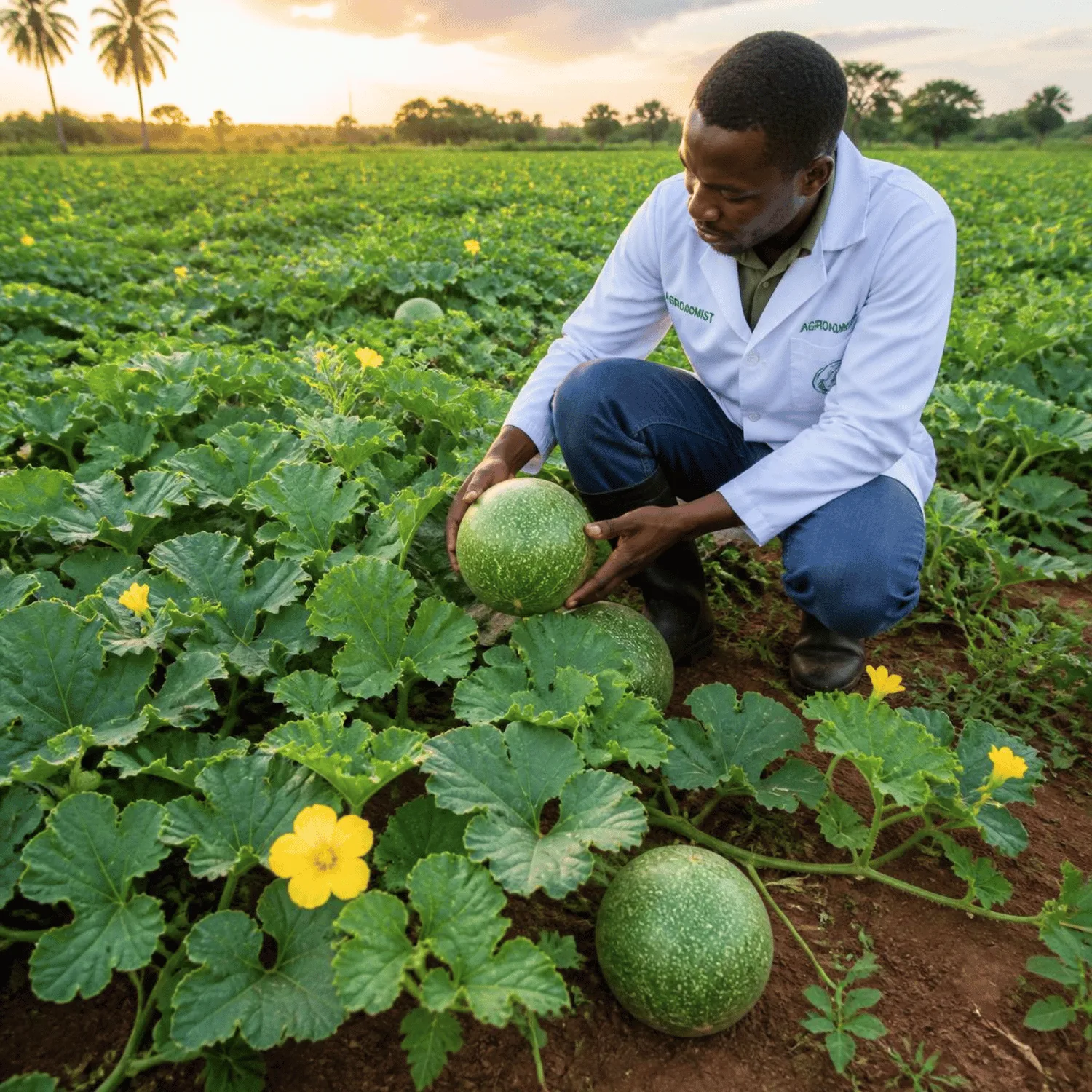
The primary egusi planting season in Nigeria starts in the second week of April for the early crop and the first week of September for the late crop. In Southern and Middle Belt states, farmers take advantage of two distinct rainfall windows to produce two complete melon cycles each year.
Planting too early in March leaves delicate seedlings stranded in dry soil when early rains fail to continue. Delaying sowing past May exposes developing melon fruits to non-stop downpours that cause widespread fruit rot and blossom drop.
Farmers in the Northern Guinea Savanna must plant once a year between late May and early June as soon as steady rainfall is established. Planning your field operations ahead of time ensures that seeds enter moist soil and reach maturity under dry, sunny conditions.
Why Is Mid-April the Best Early Sowing Window for Melon Farmers?
Mid-April represents the most productive early sowing window because the topsoil has accumulated steady moisture from early showers. Sowing melon seeds during this period allows the crop to establish robust root systems before high weed competition begins.
Scientific trials show that planting egusi around April 11 produces a peak seed yield of 767.16 kg/ha. Sowing earlier on April 1 yields only 554.46 kg/ha due to low soil moisture and high heat stress.
Planting in mid-April ensures your melon canopy completely covers the bare ground within four weeks of sprouting. This natural leafy cover protects the soil surface from erosion and retains moisture throughout dry spells.
Melon vines planted during this window flower actively before heavy June downpours wash away pollen grains. Early development guarantees full fruit setting and bigger gourds packed with plump seeds.
Field studies demonstrate that April 11 plantings achieve high leaf counts and broad leaf surfaces, which power optimal photosynthesis. Healthy leaves directly translate to bigger melon sizes and greater market value.
When Should Farmers Start Late Season Egusi Planting in Nigeria?
Late season egusi planting in Nigeria should start strictly during the first week of September in regions with bimodal rainfall. Sowing on September 1 gives the crop adequate moisture during vegetative growth while pushing the harvest into dry weather.
Field research confirms that egusi sown on September 1 yields an impressive 733.40 kg/ha of clean seed. Delaying planting to September 21 causes seed yields to plummet to 520.66 kg/ha.
Late-planted crops sown after mid-September suffer from sudden drought stress during critical flowering and pod-filling stages. Without steady moisture in late October, flowers drop prematurely and pods fail to fill out.
September 1 planting allows egusi vines to produce up to 13 lateral branches per plant, maximizing total flowering points. Abundant branching directly increases the number of harvestable gourds per hectare.
Harvesting late-season egusi in November and December allows farmers to sun-dry seeds quickly under intense Harmattan sunshine. Dry harvesting conditions eliminate the risk of post-harvest mold and seed discoloration.
How Does the Single Sowing Window Work for Northern Savanna States?
Northern states like Niger, Kaduna, Kano, and Bauchi operate on a single, continuous rainy season lasting four to five months. Egusi melon requires between 700 mm and 1,000 mm of annual rainfall, making planting in late May or early June essential.
Farmers must prepare land early so planting happens immediately after the second steady rain. Sowing into warm, freshly soaked savanna soil ensures emergence occurs within 4 to 7 days.
Savanna soils dry out quickly under intense sunlight, so planting on flat beds or low ridges helps trap root-zone moisture. Rapid vegetative spread suppresses stubborn savanna weeds like spear grass and guinea grass.
Single-season northern crops mature between September and October as rainfall begins to taper off. This natural dry cycle simplifies field harvesting and outdoor seed drying without mechanical dehydrators.
Northern farmers can book professional advice through our HTS Farms agricultural consultancy to optimize large-scale commercial melon production across savanna soil types.
How Does Rainfall Timing Affect Egusi Yields and Harvest Windows in Nigeria?
Rainfall timing determines the balance between vegetative vine spread, successful flower pollination, and fruit rot prevention. While egusi requires regular moisture during its first 60 days, excessive rainfall during fruit maturity damages yields severely.
Waterlogged soils suffocate melon root systems and promote destructive fungal diseases like anthracnose and damping-off. Selecting planting dates that match local rainfall patterns keeps the crop healthy from germination to maturity.
Understanding your regional climate triggers allows you to time planting so your crop matures right as the rains decline. This alignment prevents post-harvest rot and guarantees pristine seed quality.
What Happens to Melon Pods During Periods of Excessive Rain?
Excessive rainfall during the fruiting phase creates an overly wet microclimate beneath the dense melon vine canopy. High humidity and constant standing water cause fungal fruit rot, turning green gourds into decayed matter.
Heavy rain showers physically batter yellow melon flowers and wash away sticky pollen grains before bees can complete pollination. Unpollinated female flowers turn black and drop off the vine, cutting total fruit set drastically.
Continuous waterlogging weakens the plant root system, causing yellowing leaves and premature vine dieback. Stunted vines cannot deliver essential carbohydrates and minerals to developing fruits.
Excess moisture also causes mature melon gourds to absorb excess water, leading to rind splitting while still attached to the vine. Split fruits allow bacterial rot organisms and soil insects to destroy the seeds inside.
Farmers facing heavy rainy seasons can speak directly with our team via our HTS Farms contact page to select effective fungicides and drainage strategies.
How Does Moisture Stress During Flowering Reduce Seed Weight?
Moisture stress during flowering causes melon plants to abort flower buds to conserve internal water. When drought strikes between 40 and 60 days after sowing, fruit setting drops sharply across the entire field.
Inadequate soil moisture during the seed-filling stage prevents the embryo from developing fully inside the seed hull. This results in light, hollow seeds known locally as ipapa, which command low market prices.
Drought stress hardens the topsoil, restricting shallow root spread and reducing nutrient absorption from applied fertilizers. Stressed vines stop branching and drop older leaves prematurely to survive.
Field data indicates that egusi planted under severe moisture deficits suffers up to a 35% reduction in total seed weight per hectare. Regular soil moisture is mandatory until fruit expansion finishes completely.
Irrigated dry-season farming solves this moisture bottleneck, allowing farmers to harvest high-value melon seeds during premium off-season pricing windows.
How Can Farmers Leverage the August Break for Safe Harvesting?
The August Break is a short dry spell in Southern Nigeria that provides an ideal window to harvest early-season melon crops. Early crops planted in April reach maturity after 90 to 110 days, aligning with this dry weather window.
Harvesting during dry August weather prevents mature melon gourds from rotting on wet, muddy ground. Dry ground makes manual fruit gathering and field transport significantly faster and cheaper.
Sunlight available during the August break allows farmers to sun-dry freshly fermented and washed melon seeds thoroughly within 3 to 4 days. Fast drying preserves the bright white color of the seed hulls and stops mold formation.
Farmers who time their harvest with the August break can clear their land quickly to plant a second crop of late maize or vegetables. This double-cropping strategy doubles farm revenue from the same piece of land.
Explore our mission on the HTS Farms about us page to learn how we support Nigerian farmers with reliable cropping calendars and modern farm machinery.
What Soil Preparation and Spacing Standards Maximize Egusi Seed Tonnage?
Maximizing egusi seed yield requires well-drained, loose sandy loam soil rich in organic matter, combined with a precise 1 m × 1 m plant spacing. Soil compaction prevents melon taproots from penetrating deep into the soil to access moisture and nutrients.
Plant spacing dictates the overall plant population per hectare, which directly controls the total tonnage of harvested seeds. Spacing melon stands too far apart wastes land and lowers total yield per hectare.
Applying organic manure alongside balanced NPK fertilizer provides continuous plant nutrition throughout the vegetative and fruiting cycles. Proper field layout ensures every melon vine receives equal light and nutrients.
How Should Sandy Loam Soil Be Prepared for Melon Cultivation?
Melon cultivation requires fine, loose seedbeds created by ploughing and harrowing the soil to a depth of 15 to 20 cm. Breaking hard soil clods allows melon seeds to establish strong root networks rapidly.
Egusi thrives in soils with a pH range between 5.5 and 7.0. Soil testing should be carried out before planting to identify nutrient deficiencies and correct soil acidity using agricultural lime if needed.
On low-lying lands prone to seasonal pooling, construct raised ridges or mounds 30 cm high. Raised beds improve drainage and keep developing fruit gourds elevated above wet soil surfaces.
Incorporating 4 tonnes per hectare of well-cured poultry manure during land preparation improves soil structure and water retention. Organic manure supplies balanced micronutrients that sustain melon vines during dry spells.
Farmers can order commercial soil preparation tools and soil amendments directly from our HTS Farms online catalog for nationwide delivery.
Why Does 1m x 1m Plant Spacing Produce Superior Yields?
Field research establishes that a 1 m × 1 m plant spacing delivers the highest seed yield of 840.09 kg/ha in early cropping and 740.05 kg/ha in late cropping. This spacing achieves an optimal plant density of 20,000 stands per hectare.
Wider spacings like 1 m × 2.4 m reduce plant populations to 8,333 stands per hectare, causing total seed yields to fall to 486.17 kg/ha. Although individual vines grow longer at wide spacings, fewer stands lead to a lower total harvest.
The 1 m × 1 m configuration allows creeping vines to interlock quickly, forming a solid vegetative blanket across the soil. This dense ground cover conserves moisture and smothers competing weeds completely.
Planting two seeds per hole at a depth of 1.5 cm to 2.0 cm at 1 m × 1 m intervals ensures uniform stand emergence. Uniform spacing simplifies post-planting field maintenance and harvest gathering.
Maintaining high plant density per hectare compensates for minor field losses and maximizes revenue per acre.
How Do Organic Manure and NPK Fertilizer Combinations Drive Melon Growth?
Applying 4 tonnes per hectare of poultry manure two weeks before planting enriches the soil with nitrogen, phosphorus, and humic acids. Organic matter improves beneficial soil microbial activity and enhances moisture storage.
Top-dressing with 400 kg/ha of NPK 20:10:10 at 3 weeks after planting accelerates lateral vine branching and leaf expansion. Applying fertilizer in a circular ring 15 cm away from the plant base prevents chemical burn on tender root tissues.
Adequate phosphorus levels stimulate robust root development and promote early, abundant flowering. Potassium enhances fruit rind thickness and increases seed oil and protein concentration.
Split fertilizer applications ensure nutrients remain available during fruit development rather than leaching away during heavy rainstorms. Healthy, well-nourished vines show stronger resistance to foliar diseases.
Browse our curated selection of organic fertilizers and granular blends on the HTS Farms marketplace to support your melon crop nutrition program.
How Can Farmers Protect Egusi Crops from Pests and Maximize Intercropping Profits?
Protecting egusi from seedling pests, foliar beetles, and storage weevils preserves crop quality and protects profit margins. Egusi melon is an ideal intercrop that smothers weeds naturally while providing an early harvest before primary companion crops mature.
Implementing an integrated pest management plan controls damaging insects without harming beneficial pollinators like honeybees. Clean harvesting and drying practices prevent fungal contamination during post-harvest storage.
Combining smart intercropping designs with disciplined crop protection turns egusi into a low-risk, high-return enterprise. Proactive field management keeps crops healthy through every growth stage.
How Does Egusi Intercropping Suppress Weeds in Cassava and Maize Fields?
Intercropping egusi at 20,000 plants per hectare between rows of cassava or maize forms a living green mulch that suppresses weed growth. The dense melon foliage blocks sunlight from reaching weed seeds in the soil.
This living ground cover reduces required weeding rounds in primary crops like maize from three weedings down to just one. Slashing manual weeding labor saves farmers substantial operational costs per hectare.
Egusi root systems occupy shallow soil layers without competing aggressively with the deeper root systems of cassava or yam. This natural root stratification allows both crops to utilize soil nutrients efficiently.
Melon vines mature and get harvested within 90 to 120 days, leaving the companion cassava or maize with full access to field space and sunlight. The rotting melon leaf residue adds rich organic matter back into the soil.
Intercropping egusi diversifies seasonal income and cushions farmers against single-crop market price drops.
What Pest Control Measures Protect Seedlings and Developing Pods?
Variegated grasshoppers (Zonocerus variegatus) and leaf beetles attack young egusi seedlings within the first three weeks of emergence. Spraying Cypermethrin at 50 ml per 15 liters of water once a week from weeks 3 to 5 controls these pests effectively.
Spraying should be performed during early morning or late afternoon hours to prevent chemical drift and protect pollinating bees. Maintaining a healthy bee population is essential for high melon fruit set.
Fruit flies (Dacus spp.) pierce young melon gourds to lay eggs, causing internal fruit decay and premature drop. Setting up pheromone traps around the field perimeter traps adult flies and breaks their breeding cycle.
Clearing bush borders around your melon farm reduces rodent and bush rat populations that gnaw through mature gourds to feed on oily seeds. Clean borders ensure that melon heads remain intact until harvest.
Source verified crop protection products and knapsack sprayers directly from our HTS Farms equipment store to safeguard your field.
What Post-Harvest Processing Prevents Seed Rot and Storage Weevil Loss?
Harvest melon gourds when the attaching vine turns brown and dries out completely, signaling full maturity. Crack the hard fruits using a blunt wooden mallet rather than a sharp cutlass to avoid damaging internal seeds.
Place the cracked melon pieces face-down on clean grass for 5 to 10 days to allow the bitter white pulp to ferment and decay naturally. Fermentation loosens the seeds from the stringy interior pulp without reducing germination vitality.
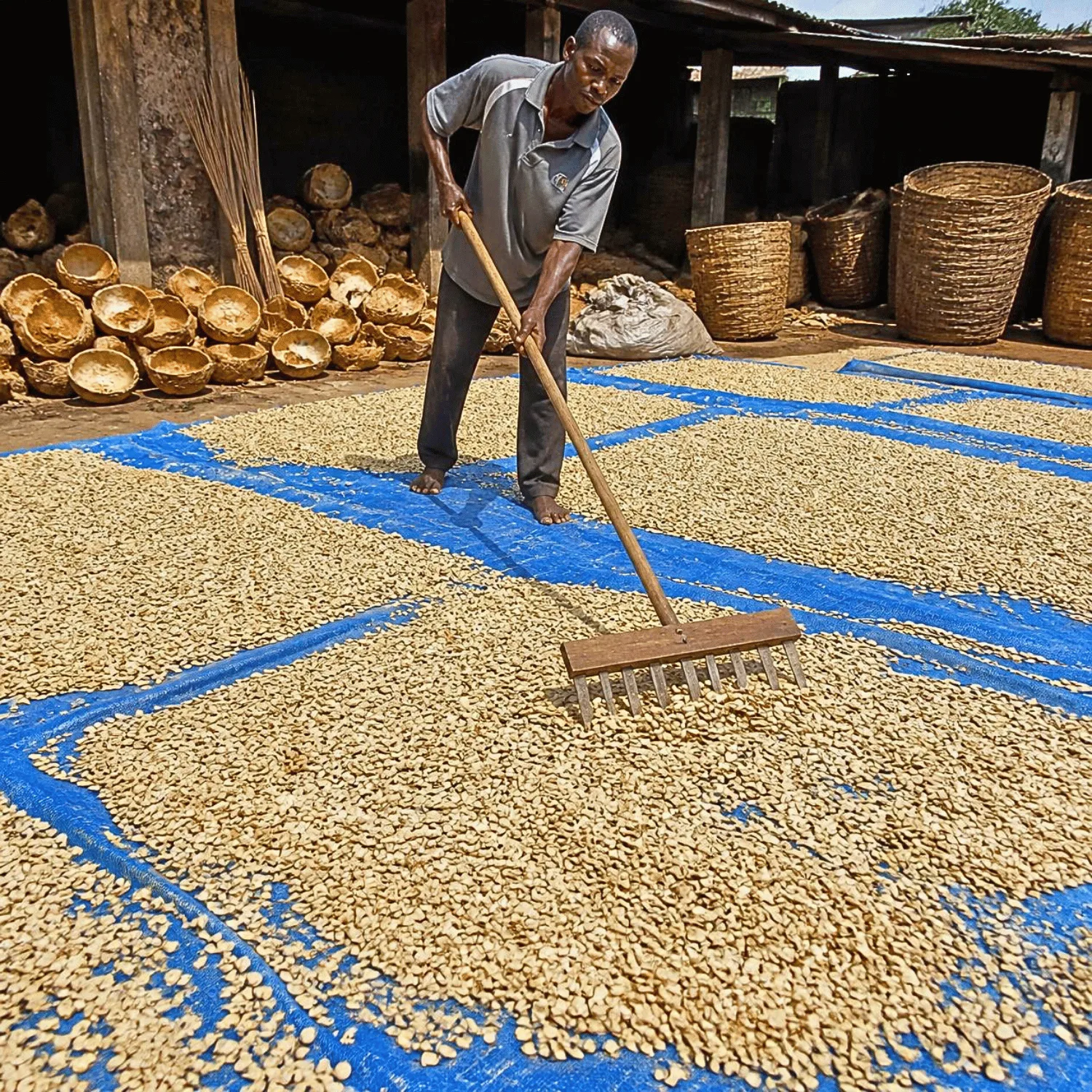
Wash the fermented seeds in clean water to remove all pulp residue, then spread them thinly on clean tarpaulins under direct sunlight. Stir the seeds multiple times daily until seed moisture falls below 7%.
Store dried egusi seeds in airtight plastic drums or metal silos to protect them from storage beetles like Tribolium castaneum and Lasioderma serricorne. Airtight storage preserves seed oil content and prevents weevil damage for over 12 months.
Properly dried and packaged egusi seeds command premium market prices from food processors and export buyers across Nigeria.
Ready to Start Your High-Yield Melon Farm?
Get high-germination certified egusi melon seeds, high-grade organic fertilizers, and reliable crop protection products delivered straight to your farm gate across Nigeria.
Shop Verified Farm Inputs NowFrequently Asked Questions
Planting egusi in July is not recommended in Southern Nigeria because heavy July and August downpours cause flower drop and severe fungal fruit rot. It is better to wait until the first week of September to begin late-season planting.
Egusi melon matures in 3 to 4 months (90 to 120 days) after seed emergence. You will know the crop is ready for harvest when the leaves turn yellow, dry up, and the fruit stalks detach easily from the gourd.
Plant 2 to 3 seeds per hole at a depth of 1.5 cm to 2.0 cm. Thin the seedlings to 2 vigorous stands per hole two weeks after germination to avoid root crowding.
A combination of 4 tonnes/ha of poultry manure incorporated before planting and 400 kg/ha of NPK 20:10:10 applied at 3 weeks after planting produces optimal vegetative growth and seed yields.
With proper management, certified seed, and a 1 m × 1 m plant spacing, a well-managed farm can produce between 750 kg and 850 kg of clean dried egusi seeds per hectare.
Timing your egusi planting season in Nigeria correctly is the key to harvesting high seed tonnage and avoiding destructive wet-season crop diseases. Planting in mid-April for early cropping or early September for late cropping aligns your farm with balanced rainfall and dry harvesting weather. Adopting a strict 1 m × 1 m spacing, applying organic manure, and implementing timely pest control ensures maximum seed yield per hectare.
HTS Farms provides Nigerian farmers with certified hybrid seeds, high-grade organic and chemical fertilizers, and modern farm machinery to drive farm profitability. Visit the HTS Farms online shop today to order your farming inputs with fast, insured delivery directly to your farm gate.
- Udom, G. N., Ukpabio, A. O., Harry, G. I., & Aderi, O. S. (2018). Effect of Sowing Dates and Spacings on Growth and Yield of Egusi Melon (Cucumeropsis mannii Naud) in Uyo, Nigeria. Nigerian Journal of Agricultural Technology (NJAT), Vol. 15(1), pp. 27–34.
- ECHO Community Research. Egusi Melon (Citrullus lanatus / Nigerian Ibara) Cultivation, Pest Management, and Nutritional Profile. ECHO Tropical Agriculture Resources.
- Ondo State Ministry of Agriculture & Forestry. ODSG Trains Farmers on Soil Analysis Testing and Crop Land Preparation. The Hope Newspaper.
- Farmer Agronomy Field Observations. Egusi Planting Time and Rainfall Yield Interactions. Nairaland Agriculture Forum.