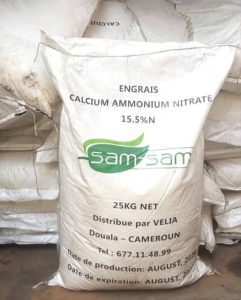
Fertilizers & Soil Health: The “Food” for Your Crops
If you want a massive harvest, you must understand that you are not just growing plants; you are managing soil biology. Think of fertilizer as the essential nutrients that the soil can no longer provide on its own after years of farming.
What are the best fertilizers for Nigerian soil in 2026?
Most Nigerian soils, especially in the South, tend to be acidic, while Northern soils often lack organic matter and nitrogen. To fix this, you need the “Big Three” nutrients: Nitrogen (N), Phosphorus (P), and Potassium (K).
NPK 15-15-15: This is the “balanced diet.” It provides equal parts of the three main nutrients and is the safest bet for general-purpose farming.
NPK 20-10-10: Very popular in the Eastern and North-Central zones for grains like maize and rice. It has a higher nitrogen kick to help young plants grow tall and green.
Urea (46-0-0): This is pure nitrogen. Use this as a “top-dressing” (adding it after the plant has already started growing) to give crops like maize or leafy vegetables a rapid growth spurt.
How to find reliable fertilizer dealers and wholesale prices
In 2026, the average price for a 50kg bag of NPK ranges between ₦38,000 and ₦50,000. To avoid fakes, don’t buy from the “unbranded truck.” Look for registered fertilizer wholesale points or hubs authorized by the Federal Ministry of Agriculture. Reputable brands like Indorama, Notore, and Golden Fertilizer now use digital tracking codes on their bags. If you can’t scan it to verify the batch, don’t buy it.
Liquid Manure: The “Microwave” of Plant Nutrition
While granular fertilizer is like a “slow cooker” that releases nutrients over months, liquid manure or foliar fertilizer is like a microwave—it gives the plants nutrients they can use immediately.
Best Use: Use liquid manure during dry-season farming or when you notice a sudden nutrient deficiency (yellowing leaves).
Advantage: It is absorbed through the leaves (foliar feeding), meaning it works even if the soil is too dry for granules to melt.
Essential Farm Hand Tools & General Hardware
You cannot build a modern commercial farm with only a rusted hoe and a blunt cutlass. As we move further into 2026, efficiency is the only way to stay profitable with rising labor costs.
Which agriculture tools do you need for a new farm?
Standard agric tools are still necessary, but they have evolved.
Hand Planters: Instead of bending down for hours, these “walking sticks” drop a seed and a pinch of fertilizer at the exact depth required.
Knapsack Sprayers: These are non-negotiable for applying agro chemicals. Look for models with “padded straps” to prevent back injuries—your health is your most important farm input.
Modern Hoes: Look for “scuffle hoes” or “draw hoes” made of high-carbon steel. They stay sharp longer and slice through tough Nigerian weeds like a knife through butter.
Why an agricultural scale is your best investment for ROI
The biggest mistake Nigerian farmers make is selling produce by “heaps” or “bags.” A “bag” of ginger in 2026 doesn’t weigh the same as a “bag” of maize. Buying a heavy-duty agricultural scale allows you to “show your workings.” When you know your exact weight in kilograms, you can negotiate better prices with agri store buyers and off-takers who normally try to cheat uneducated farmers.